Buy promovat.eu ?
We are moving the project
promovat.eu .
Are you interested in purchasing the domain
promovat.eu ?
domain@kv-gmbh.de · 0541-91531010
Buy promovat.eu ?
How do you prove surjectivity?
To prove surjectivity, you need to show that for every element in the codomain, there exists at least one element in the domain that maps to it. One way to do this is by taking an arbitrary element in the codomain and finding a pre-image for it in the domain. If you can find a pre-image for every element in the codomain, then the function is surjective. Another approach is to show that the range of the function is equal to the codomain, indicating that every element in the codomain is being mapped to. **
How can one show surjectivity?
One can show surjectivity by demonstrating that every element in the codomain has a preimage in the domain. This can be done by showing that for every y in the codomain, there exists an x in the domain such that f(x) = y. In other words, the function "covers" the entire codomain, leaving no elements without a preimage. This can be shown through direct proof, by finding the specific preimage for each element in the codomain, or through a more general argument, such as showing that the function is onto. **

Similar search terms for Surjectivity
Top-Angebote
Products related to Surjectivity:
-
Inspired Finds 4.72in Mini 3D Hologram Fan USB Advertising Display Light 4.72in Mini 3D Hologram Fan USB Advertising Display LightTurn any counter, shelf, or event table into an attentiongrabbing display with this mini 3D hologram fan. Designed to create floatingstyle visuals with a compact spinning LED setup, it adds a futuristic look that feels far more exciting than an...93,99 $*Shipping: 0,00 $Secure redirect to the provider
-
Linon May Blue and Gold Campaign DeskWork in style on the May Blue and Gold Campaign Desk. The spacious top has a rich blue finish accented by the X styled matte gold legs. Small round gold knobs grace the front of the large storage drawer.268,20 $*Shipping: 0,00 $Secure redirect to the provider
-
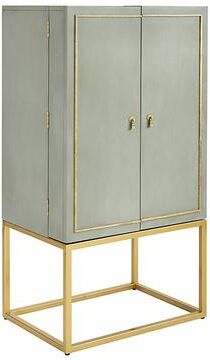
Harper Campaign Bar - Brushed Gray - Ballard DesignsCampaign furniture as has been around since the Romans and reached its pinnacle during the British Empire. Our Harper Campaign Furniture Bar Cabinet captures that refined spirit in elegant detail. Cabinet doors are trimmed in antique gold and open...1189,30 $*Shipping: 259,00 $Secure redirect to the provider
-
Drop Dash Deals Waterproof Double Sided LED Advertising Light Box Illuminated Sign Board Waterproof Double Sided LED Advertising Light Box Illuminated Sign BoardStep into a brighter way to show off your brand with this premium 1 pc of LED advertising light box that instantly elevates visibility day and night. Designed for business owners, shopkeepers, and event promoters who want their message seen, its...229,97 $*Shipping: 0,00 $Secure redirect to the provider



-
How can one check images for surjectivity?
One can check images for surjectivity by examining whether the range of the function covers the entire codomain. To do this, one can analyze the function's output for different input values and determine if every element in the codomain is covered. If the function's image covers the entire codomain, then the function is surjective. Another approach is to use the definition of surjectivity, which states that for every y in the codomain, there exists an x in the domain such that f(x) = y. By verifying this condition for all elements in the codomain, one can determine if the function is surjective. **
-
What is the injectivity and surjectivity of compositions?
The injectivity of compositions refers to the property of a composition of functions where if the composition of two functions is injective, then the outer function is injective. Similarly, the surjectivity of compositions refers to the property where if the composition of two functions is surjective, then the inner function is surjective. In other words, the injectivity and surjectivity of compositions are related to the properties of the individual functions within the composition. **
-
Is there no injectivity or no surjectivity here?
There is no surjectivity here. Surjectivity means that every element in the codomain is mapped to by at least one element in the domain. In this case, there are elements in the codomain that are not being mapped to by any element in the domain, so the function is not surjective. **
-
Why do we need injectivity, surjectivity, or bijectivity?
Injectivity, surjectivity, and bijectivity are important concepts in mathematics because they help us understand the relationship between different sets and functions. Injectivity ensures that each element in the domain maps to a unique element in the codomain, which is useful for preventing information loss in functions. Surjectivity guarantees that every element in the codomain is mapped to by at least one element in the domain, ensuring that no information is left out. Bijectivity combines these two properties, providing a one-to-one correspondence between elements in the domain and codomain, making it easier to establish relationships and solve problems in various mathematical contexts. **


Examine the sets for injectivity, surjectivity, and bijectivity.
The sets can be examined for injectivity, surjectivity, and bijectivity by analyzing the relationship between the elements of the domain and the codomain. Injectivity can be determined by checking if each element in the domain maps to a unique element in the codomain. If there are no two distinct elements in the domain that map to the same element in the codomain, the function is injective. Surjectivity can be determined by checking if every element in the codomain has at least one pre-image in the domain. If every element in the codomain is mapped to by at least one element in the domain, the function is surjective. Bijectivity can be determined by checking if the function is both injective and surjective. If every element in the codomain has a unique pre-image in the domain, and every element in the codomain is mapped to, the function is bijective. **
What methods do you know to prove surjectivity?
One method to prove surjectivity is to show that for every element in the codomain, there exists at least one element in the domain that maps to it. This can be done by explicitly finding the pre-image of each element in the codomain. Another method is to use the concept of range and show that the range of the function is equal to the codomain. Additionally, one can use the contrapositive of the definition of surjectivity, which states that if there exists an element in the codomain that does not have a pre-image in the domain, then the function is not surjective. **
Top-Angebote
Products related to Surjectivity:
-
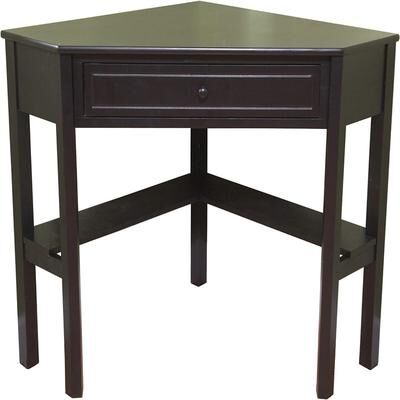
No Marketing Systems Wood Corner Desk"The corner desk measures 42"" X 28"" X 30"" And Weighs 42 lbs. Arrives with only minimal Assembly required. Comfortably fitting in any home, studio, apartment, and office, The small corner writing desk maximizes space in compact rooms."258,89 $*Shipping: 0,00 $Secure redirect to the provider
-
Inspired Finds 4.72in Mini 3D Hologram Fan USB Advertising Display Light 4.72in Mini 3D Hologram Fan USB Advertising Display LightTurn any counter, shelf, or event table into an attentiongrabbing display with this mini 3D hologram fan. Designed to create floatingstyle visuals with a compact spinning LED setup, it adds a futuristic look that feels far more exciting than an...93,99 $*Shipping: 0,00 $Secure redirect to the provider
-
Linon May Blue and Gold Campaign DeskWork in style on the May Blue and Gold Campaign Desk. The spacious top has a rich blue finish accented by the X styled matte gold legs. Small round gold knobs grace the front of the large storage drawer.268,20 $*Shipping: 0,00 $Secure redirect to the provider
-
How do you prove surjectivity?
To prove surjectivity, you need to show that for every element in the codomain, there exists at least one element in the domain that maps to it. One way to do this is by taking an arbitrary element in the codomain and finding a pre-image for it in the domain. If you can find a pre-image for every element in the codomain, then the function is surjective. Another approach is to show that the range of the function is equal to the codomain, indicating that every element in the codomain is being mapped to. **
-
How can one show surjectivity?
One can show surjectivity by demonstrating that every element in the codomain has a preimage in the domain. This can be done by showing that for every y in the codomain, there exists an x in the domain such that f(x) = y. In other words, the function "covers" the entire codomain, leaving no elements without a preimage. This can be shown through direct proof, by finding the specific preimage for each element in the codomain, or through a more general argument, such as showing that the function is onto. **
-
How can one check images for surjectivity?
One can check images for surjectivity by examining whether the range of the function covers the entire codomain. To do this, one can analyze the function's output for different input values and determine if every element in the codomain is covered. If the function's image covers the entire codomain, then the function is surjective. Another approach is to use the definition of surjectivity, which states that for every y in the codomain, there exists an x in the domain such that f(x) = y. By verifying this condition for all elements in the codomain, one can determine if the function is surjective. **
-
What is the injectivity and surjectivity of compositions?
The injectivity of compositions refers to the property of a composition of functions where if the composition of two functions is injective, then the outer function is injective. Similarly, the surjectivity of compositions refers to the property where if the composition of two functions is surjective, then the inner function is surjective. In other words, the injectivity and surjectivity of compositions are related to the properties of the individual functions within the composition. **
Similar search terms for Surjectivity
-
Harper Campaign Bar - Brushed Gray - Ballard DesignsCampaign furniture as has been around since the Romans and reached its pinnacle during the British Empire. Our Harper Campaign Furniture Bar Cabinet captures that refined spirit in elegant detail. Cabinet doors are trimmed in antique gold and open...1189,30 $*Shipping: 259,00 $Secure redirect to the provider
-
Drop Dash Deals Waterproof Double Sided LED Advertising Light Box Illuminated Sign Board Waterproof Double Sided LED Advertising Light Box Illuminated Sign BoardStep into a brighter way to show off your brand with this premium 1 pc of LED advertising light box that instantly elevates visibility day and night. Designed for business owners, shopkeepers, and event promoters who want their message seen, its...229,97 $*Shipping: 0,00 $Secure redirect to the provider
-
iNSPIRE Q Junior Kedric Gold Accent Campaign DresserCombine classic and contemporary style with the Kedric dresser from iNSPIRE Q. Constructed from poplar wood and MDF, this spacious dresser features spacious, smooth-gliding drawers, accented with gold-finished metal hardware.601,98 $*Shipping: 0,00 $Secure redirect to the provider
-
Is there no injectivity or no surjectivity here?
There is no surjectivity here. Surjectivity means that every element in the codomain is mapped to by at least one element in the domain. In this case, there are elements in the codomain that are not being mapped to by any element in the domain, so the function is not surjective. **
-
Why do we need injectivity, surjectivity, or bijectivity?
Injectivity, surjectivity, and bijectivity are important concepts in mathematics because they help us understand the relationship between different sets and functions. Injectivity ensures that each element in the domain maps to a unique element in the codomain, which is useful for preventing information loss in functions. Surjectivity guarantees that every element in the codomain is mapped to by at least one element in the domain, ensuring that no information is left out. Bijectivity combines these two properties, providing a one-to-one correspondence between elements in the domain and codomain, making it easier to establish relationships and solve problems in various mathematical contexts. **
-
Examine the sets for injectivity, surjectivity, and bijectivity.
The sets can be examined for injectivity, surjectivity, and bijectivity by analyzing the relationship between the elements of the domain and the codomain. Injectivity can be determined by checking if each element in the domain maps to a unique element in the codomain. If there are no two distinct elements in the domain that map to the same element in the codomain, the function is injective. Surjectivity can be determined by checking if every element in the codomain has at least one pre-image in the domain. If every element in the codomain is mapped to by at least one element in the domain, the function is surjective. Bijectivity can be determined by checking if the function is both injective and surjective. If every element in the codomain has a unique pre-image in the domain, and every element in the codomain is mapped to, the function is bijective. **
-
What methods do you know to prove surjectivity?
One method to prove surjectivity is to show that for every element in the codomain, there exists at least one element in the domain that maps to it. This can be done by explicitly finding the pre-image of each element in the codomain. Another method is to use the concept of range and show that the range of the function is equal to the codomain. Additionally, one can use the contrapositive of the definition of surjectivity, which states that if there exists an element in the codomain that does not have a pre-image in the domain, then the function is not surjective. **
* All prices are inclusive of VAT and, if applicable, plus shipping costs. The offer information is based on the details provided by the respective shop and is updated through automated processes. Real-time updates do not occur, so deviations can occur in individual cases. ** Note: Parts of this content were created by AI.