Buy promovat.eu ?
We are moving the project
promovat.eu .
Are you interested in purchasing the domain
promovat.eu ?
domain@kv-gmbh.de · 0541-91531010
Buy promovat.eu ?
What is a resultant wave in physics?
In physics, a resultant wave is the combination of two or more individual waves that are superimposed on each other. When waves with different amplitudes, frequencies, or phases overlap, they create a new wave pattern known as the resultant wave. The properties of the resultant wave, such as its amplitude, frequency, and phase, are determined by the properties of the individual waves that combine to form it. Resultant waves are important in understanding phenomena such as interference, diffraction, and standing waves. **
What is the resultant of a triangular load?
The resultant of a triangular load is the single force that can replace the distributed load while producing the same effect on the structure. It is the equivalent concentrated force that acts at a specific point on the structure. The magnitude and direction of the resultant force depend on the shape and intensity of the triangular load. Calculating the resultant force is important in structural analysis to simplify the analysis of complex loads. **


Similar search terms for Resultant
Top-Angebote
Products related to Resultant:
-
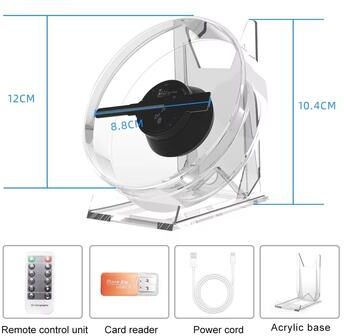
Inspired Finds 4.72in Mini 3D Hologram Fan USB Advertising Display Light 4.72in Mini 3D Hologram Fan USB Advertising Display LightTurn any counter, shelf, or event table into an attentiongrabbing display with this mini 3D hologram fan. Designed to create floatingstyle visuals with a compact spinning LED setup, it adds a futuristic look that feels far more exciting than an...93,99 $*Shipping: 0,00 $Secure redirect to the provider
-
Drop Dash Deals Waterproof Double Sided LED Advertising Light Box Illuminated Sign Board Waterproof Double Sided LED Advertising Light Box Illuminated Sign BoardStep into a brighter way to show off your brand with this premium 1 pc of LED advertising light box that instantly elevates visibility day and night. Designed for business owners, shopkeepers, and event promoters who want their message seen, its...229,97 $*Shipping: 0,00 $Secure redirect to the provider



-
What is the resultant vector with two lengths and angles?
The resultant vector with two lengths and angles is the single vector that represents the combined effect of the two original vectors. To find the resultant vector, we use the parallelogram law of vector addition, which involves adding the two vectors tip to tail and then drawing the diagonal of the parallelogram formed. The length and angle of the resultant vector can be calculated using trigonometric functions such as sine and cosine. This resultant vector represents the combined effect of the original vectors in terms of both magnitude and direction. **
-
What formula do I use to calculate the resultant force?
To calculate the resultant force, you can use the formula: Resultant force = √(Fx^2 + Fy^2) Where Fx is the force in the x-direction and Fy is the force in the y-direction. This formula is derived from the Pythagorean theorem, which states that the magnitude of the resultant force is equal to the square root of the sum of the squares of the individual forces in each direction. **
-
What is the angle when two forces form a resultant?
When two forces form a resultant, the angle between the two forces can be found using the law of cosines. The angle can be calculated using the formula: cos(θ) = (F1^2 + F2^2 - R^2) / (2 * F1 * F2), where F1 and F2 are the magnitudes of the two forces and R is the magnitude of the resultant force. This angle represents the direction of the resultant force in relation to the original forces. **
-
What is the graphical resultant force of more than 3 forces?
The graphical resultant force of more than 3 forces is found by using the polygon method. This method involves drawing the forces as vectors with their tails at the same point, and then completing the polygon by drawing the final side from the head of the last vector to the tail of the first vector. The resultant force is then the vector that closes the polygon. This method allows us to find the magnitude and direction of the resultant force by using vector addition. **


How do you calculate the resultant force without using the cosine law?
To calculate the resultant force without using the cosine law, you can use the Pythagorean theorem. First, you would calculate the horizontal and vertical components of the forces. Then, you would use the Pythagorean theorem to find the magnitude of the resultant force by taking the square root of the sum of the squares of the horizontal and vertical components. Finally, you can use trigonometric functions to find the direction of the resultant force. **
What is campaign advertising?
Campaign advertising refers to the use of various media platforms, such as television, radio, print, and digital, to promote a political candidate or party and their platform. These advertisements are designed to persuade and influence voters to support a particular candidate or party during an election. Campaign advertising often includes messages about the candidate's qualifications, policy positions, and criticisms of their opponents. It is a key component of political campaigns and plays a significant role in shaping public opinion and voter behavior. **
Top-Angebote
Products related to Resultant:
-
No Marketing Systems Wood Corner Desk"The corner desk measures 42"" X 28"" X 30"" And Weighs 42 lbs. Arrives with only minimal Assembly required. Comfortably fitting in any home, studio, apartment, and office, The small corner writing desk maximizes space in compact rooms."269,99 $*Shipping: 0,00 $Secure redirect to the provider
-
HARPERCOLLINS Donald Miller 3 Book Collection Set – Business Made Simple, Marketing Made Simple & How to Grow Your Small Business Entrepreneurship & Marketing GuiDonald Miller Collection 3 Books Set (How to Grow Your Small Business, Business Made Simple, Marketing Made Simple): How to Grow Your Small Business: Speak to the heart of your target audience and create a movement around your mission or campaign through this comprehensive, step-by-step approach to crafting messages that resonate. Donald Miller, author of the bestselling Building a StoryBrand, has helped thousands of individuals, corporations, and justice-oriented organizations turn vision into action using the organized, easy to implement communication framework outlined in these pages. Business Made Simple: Donald Miller knows that business is more than just a good idea made profitable it s a system of unspoken rules, rarely taught by MBA schools. If you are attempting to profitably grow your business or career, you need elite business knowledge knowledge that creates tangible value. Even if you had the time, access, or money to attend a Top 20 business school, you would still be missing the practical knowledge that propels the best and brightest forward. Marketing Made Simple: Donald Miller, is a must-have for any marketing professional or small business owner who wants grow their business.It will teach you how to create and implement a sales funnel that will increase traffic and drive sales. Every day, your company is losing sales simply because you do not have a clear path to attract new customers. You’re not alone. Based on proven principles from Building a StoryBrand , this 5-part checklist is the ultimate resource for marketing professionals and business owners as they cultivate a sales funnel that flows across key customer touchpoints to effectively develop, strengthen, and communicate their brand’s story to the marketplace.18,99 £*Shipping: 2,99 £Secure redirect to the provider
-
Inspired Finds 4.72in Mini 3D Hologram Fan USB Advertising Display Light 4.72in Mini 3D Hologram Fan USB Advertising Display LightTurn any counter, shelf, or event table into an attentiongrabbing display with this mini 3D hologram fan. Designed to create floatingstyle visuals with a compact spinning LED setup, it adds a futuristic look that feels far more exciting than an...93,99 $*Shipping: 0,00 $Secure redirect to the provider
-
What is a resultant wave in physics?
In physics, a resultant wave is the combination of two or more individual waves that are superimposed on each other. When waves with different amplitudes, frequencies, or phases overlap, they create a new wave pattern known as the resultant wave. The properties of the resultant wave, such as its amplitude, frequency, and phase, are determined by the properties of the individual waves that combine to form it. Resultant waves are important in understanding phenomena such as interference, diffraction, and standing waves. **
-
What is the resultant of a triangular load?
The resultant of a triangular load is the single force that can replace the distributed load while producing the same effect on the structure. It is the equivalent concentrated force that acts at a specific point on the structure. The magnitude and direction of the resultant force depend on the shape and intensity of the triangular load. Calculating the resultant force is important in structural analysis to simplify the analysis of complex loads. **
-
What is the resultant vector with two lengths and angles?
The resultant vector with two lengths and angles is the single vector that represents the combined effect of the two original vectors. To find the resultant vector, we use the parallelogram law of vector addition, which involves adding the two vectors tip to tail and then drawing the diagonal of the parallelogram formed. The length and angle of the resultant vector can be calculated using trigonometric functions such as sine and cosine. This resultant vector represents the combined effect of the original vectors in terms of both magnitude and direction. **
-
What formula do I use to calculate the resultant force?
To calculate the resultant force, you can use the formula: Resultant force = √(Fx^2 + Fy^2) Where Fx is the force in the x-direction and Fy is the force in the y-direction. This formula is derived from the Pythagorean theorem, which states that the magnitude of the resultant force is equal to the square root of the sum of the squares of the individual forces in each direction. **
Similar search terms for Resultant
-
Drop Dash Deals Waterproof Double Sided LED Advertising Light Box Illuminated Sign Board Waterproof Double Sided LED Advertising Light Box Illuminated Sign BoardStep into a brighter way to show off your brand with this premium 1 pc of LED advertising light box that instantly elevates visibility day and night. Designed for business owners, shopkeepers, and event promoters who want their message seen, its...229,97 $*Shipping: 0,00 $Secure redirect to the provider
-
Linon May Blue and Gold Campaign DeskWork in style on the May Blue and Gold Campaign Desk. The spacious top has a rich blue finish accented by the X styled matte gold legs. Small round gold knobs grace the front of the large storage drawer.268,20 $*Shipping: 0,00 $Secure redirect to the provider
-
What is the angle when two forces form a resultant?
When two forces form a resultant, the angle between the two forces can be found using the law of cosines. The angle can be calculated using the formula: cos(θ) = (F1^2 + F2^2 - R^2) / (2 * F1 * F2), where F1 and F2 are the magnitudes of the two forces and R is the magnitude of the resultant force. This angle represents the direction of the resultant force in relation to the original forces. **
-
What is the graphical resultant force of more than 3 forces?
The graphical resultant force of more than 3 forces is found by using the polygon method. This method involves drawing the forces as vectors with their tails at the same point, and then completing the polygon by drawing the final side from the head of the last vector to the tail of the first vector. The resultant force is then the vector that closes the polygon. This method allows us to find the magnitude and direction of the resultant force by using vector addition. **
-
How do you calculate the resultant force without using the cosine law?
To calculate the resultant force without using the cosine law, you can use the Pythagorean theorem. First, you would calculate the horizontal and vertical components of the forces. Then, you would use the Pythagorean theorem to find the magnitude of the resultant force by taking the square root of the sum of the squares of the horizontal and vertical components. Finally, you can use trigonometric functions to find the direction of the resultant force. **
-
What is campaign advertising?
Campaign advertising refers to the use of various media platforms, such as television, radio, print, and digital, to promote a political candidate or party and their platform. These advertisements are designed to persuade and influence voters to support a particular candidate or party during an election. Campaign advertising often includes messages about the candidate's qualifications, policy positions, and criticisms of their opponents. It is a key component of political campaigns and plays a significant role in shaping public opinion and voter behavior. **
* All prices are inclusive of VAT and, if applicable, plus shipping costs. The offer information is based on the details provided by the respective shop and is updated through automated processes. Real-time updates do not occur, so deviations can occur in individual cases. ** Note: Parts of this content were created by AI.